

Shiv Sena has so far expressed concerns over car shed for the city's planned metro network, the bullet train and the West Coast refinery projects.

Total income from operations, however, dipped 27 per cent to Rs 68,261 crore.
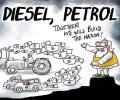
The government on Friday slapped an export tax on petrol, diesel and jet fuel (ATF) while also joining nations like the UK in imposing a windfall tax on crude oil produced locally. A Rs 6 per litre tax on export of petrol and ATF and Rs 13 per litre tax on export of diesel is effective from July 1, finance ministry notifications showed. Additionally, a Rs 23,250 per tonne tax was levied on crude oil produced domestically.

Mukesh Ambani said new projects in petrochemicals and refinery business would come online in the next two to three years.

The price of diesel sold to bulk users has been hiked by about Rs 25 per litre in line with a near 40 per cent rise in international oil prices, but retail rates at petrol pumps remain unchanged, sources said. Petrol pump sales have jumped by a fifth this month after bulk users like bus fleet operators and malls queued up at petrol bunks to buy fuel rather than the usual practice of ordering directly from oil companies, widening the losses of retailers. Worst hit are private retailers like Nayara Energy, Jio-bp and Shell, who have so far refused to curtail any volume despite a surge in sales.

'I would not suggest buying these stocks in the dip, as the upside in profit is dented without a safety net for a rainy day.'
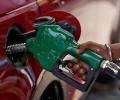
Petrol doped with 20 per cent ethanol was rolled out on Monday at select petrol pumps in 11 states and union territories as part of a programme to increase use of biofuels to cut emissions as well as dependence on foreign exchange-draining imports. At present, 10 per cent ethanol is blended in petrol (10 per cent ethanol, 90 per cent petrol) and the government is looking to double this quantity by 2025. Prime Minister Narendra Modi launched the higher 20 per cent ethanol blended petrol two months ahead of the planned rollout in April, at the India Energy Week (IEW) 2023 in Bengaluru.
Reliance Industries Ltd will give Rs 750 crore (Rs 7.5 billion) discount on LPG and kerosene to public sector petro retailers in 2005-06.

The Vedanta group on Wednesday confirmed putting in a preliminary expression of interest (EoI) for buying the government's stake in Bharat Petroleum Corp Ltd (BPCL).
Reliance Industries Ltd, India's largest private firm, will invest $5.5 to 6 billion to raise capacity of its Jamnagar oil refinery to 60 million tonnes by 2009.
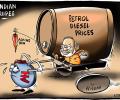
What could be more uncertain than Virat Kohli's agonising wait for a century for over two years? Perhaps it's what you will pay tomorrow morning to fill your vehicle's tank. Pump prices have joined cricket scores as the country's favourite discussion topic. Steep increases invite widespread protests, while moderate additions make the government anti-reformist. The ongoing fuel price conundrum is no different.
Reliance Industries Ltd's legal battle over the Uttar Pradesh government's decision to impose 21 per cent value-added tax on gas is holding up supply to NTPC's two power plants and Indian Oil Corporation's Mathura refinery, despite a group of ministers making allocation to them.
The company is in advanced talks with Hindustan Petroleum Corp, Chennai Refinery and Kochi Refineries for sale of 34,000 barrels per day of oil it will start producing from the gas-rich KG-D6 block on Krishna Godavari basin from September. The company is investing $2.234 billion in developing the MA-1 and MA-2 oil fields in the predominantly gas-rich block.
In two separate filings, both the companies said a meeting of the board of directors will be held on March 2, to consider and recommend the amalgamation of Reliance Petroleum and Reliance Industries, the country's most valued firm in terms of market capitalisation.

RIL operates 33 million tonne domestic-tariff area or DTA refinery that sells most of its products to domestic market, and 29 million tonne only-for-exports or SEZ unit.

Ajit Mishra, vice president, Research, Religare Broking, answers your queries.

The company feels valuations are low and the demand would later rise.

The new Special Economic Zones, including the Reliance Industries' Jamnagar refinery, would help increase India's SEZ exports by 40 per cent this fiscal, righting partially the dismal picture of the country's total exports, according to government estimates.

Reliance has small parcels of land in West Bengal for its agri-retail plan.
CPCL, in which Indian Oil holds 51 per cent stake, runs a 9.5-million tonnes per annum refinery at Manali in Chennai.

In 2017, a consortium led by Russian state oil company Rosneft agreed to buy Essar Oil for $12.9 billion in India's biggest foreign acquisition of a homegrown company. Rosneft's buyout of Essar's assets was meant to herald a wave of energy investments in India - over six decades after Esso, Caltex and Shell invested in India's refining sector in the 1950s. But the government has tripped up in its efforts to sell Bharat Petroleum Corporation Ltd (BPCL), formerly Burmah Shell, a blue chip public sector company. Bidders include a couple of global funds and resources firm Vedanta.

Reliance from 0600 hours today began complying with an oil ministry order asking it to first supply gas produced from eastern offshore KG-D6 fields to priority users -- urea making fertiliser plants, electricity generation houses, LPG extraction units and city gas distribution firms.
Reliance's Jamnagar units, including the existing refinery and the second one that will begin work by mid-November, will be the world's largest single-location refining facility. The entire refinery complex will have a total processing capacity of 1.24 million barrels a day. The current production of the existing unit is 0.66 million barrels a day.
The company restarted CDU-I on Thursday, an industry source said. Earlier this month the company had said it would partially shut down the refinery (J-1) for 2-3 weeks to carry out maintenance work.
Indian Oil Corp is unlikely to bid for a share in six new pipelines being built by Reliance Industries to transport fuel from its refinery to its planned chain of petrol stations.\n\n\n\n
India Inc is looking at the public sector to steer its ambitions, as former PSU heads are taken on board to lead the private sector.

Traditionally, Singapore and the UAE have been India's biggest sources of petrol and diesel.
Reliance Industries will buy 7.5 mn tons of crude oil from Venezuela for its upcoming export-oriented refinery at Jamnagar. The company has been sourcing crude oil from Venezuela, the only OPEC member country from Latin America, for its existing 660000 barrels per day (33 mn tons) refinery at Jamnagar. Venezuela has agreed to supply 150000 barrels per day of oil from June under a long-term supply contract. Reliance is on a sphere to tie-up crude supplies for its new refinery.
Mukesh Ambani-controlled Reliance Industries Ltd (RIL) is planning to spend $3 billion for a new petrochemical complex at Jamnagar.The new complex will utilise residual gases generated from the two existing refineries, of which one is located in a special economic zone (SEZ), to generate further downstream products."The investment could be in the range of $3 billion, depending on raw material prices," said a Reliance official on condition of anonymity.
Larsen and Toubro Ltd said on Monday it has bagged Rs 800-crore (Rs 8 billion) contract from Reliance Industries Ltd for construction services and supply of electrical systems for its SEZ refinery and petrochemical project in Jamnagar, Gujarat.

Richest Indian Gautam Adani's ports-to-power-to-cement conglomerate is "deeply overleveraged" with the group predominantly using debt to invest aggressively across existing as well as new businesses, CreditSights, a Fitch Group unit, said on Tuesday. In a report titled 'Adani Group: Deeply Overleveraged', CreditSights said, "In the worst-case scenario, overly ambitious debt-funded growth plans could eventually spiral into a massive debt trap, and possibly culminate into a distressed situation or default of one or more group companies." Starting out as a commodities trader in the late 1980s, the Adani group has diversified from mines, ports and power plants into airports, data centers and defence.

Reliance Industries chairman Mukesh Ambani has said issue of bonus shares after a 12-year hiatus was just fulfilment of the company's commitment to reward shareholders after completion of important projects.
The fertiliser and power companies say that the cost of gas would be too high, making operating on gas economically unviable.
An empowered group of ministers headed by Defence Minister A K Antony is to consider an Oil Ministry proposal of abolishing the priority ranking later in the day, according to which natural gas is first given to urea manufacturing fertiliser plants, then to LPG units, followed by power plants, city gas, steel and refineries.

Ambani is banking on new businesses to boost profit as earnings from producing oil and natural gas has slowed in the past three years.

India's traditional companies are now moving full scale into the renewable and alternative energy space that had been dominated by smaller players over the past decade. Companies such as government-owned NTPC and the Adani and the Tata groups restructured their businesses well in time to become major players in the green space. At the same time, other conventional companies, such as Larsen & Toubro and Reliance Industries Ltd (RIL), which have a presence both in the energy sector as well as myriad other activities - construction, technology and retailing - are tying up with new-age companies to hitch a ride to a greener path.

US energy major Chevron Corp will buy upto 40 per cent stake in Reliance Industry's gas rich D-6 block in KG Basin and become a co-promoter of its new export oriented refinery.
